







Our clients say 9.5/10
Based on 64,534+ reviews in Canada for 2026 
9.5/10
Based on 64,534+ reviews
Based on 64,534+ reviews
Overview
Hearing loss is the third most common health condition among adults in Canada. 60% of Canadians aged 19 to 79 experience hearing problems. Over 50% aged 40 to 79 have a measurable hearing loss.
Hearing loss is more common than you might think.
1 in 5 Canadian adults experience some form of hearing loss
Hearing loss is also shockingly prevalent across Canada. In fact, 1 in 5 (20%) of Canadian adults suffer from at least a mild hearing loss.
Even among younger adults, ages 20-40, incidence of hearing loss is rounding the corner to 1 in 10, but by the ages of 60 to 80, it has stricken almost half the population.



Canada recognizes hearing loss as a disability. You may qualify for the Disability Tax Credit (DTC), depending on the severity of your hearing loss. A licensed audiologist or other hearing professional can help confirm your eligibility.
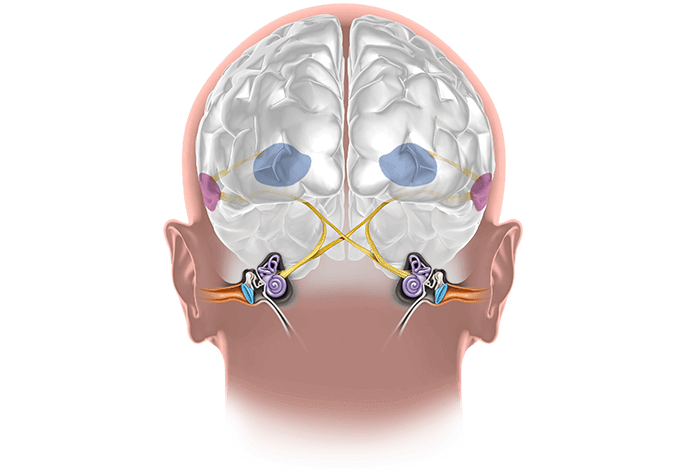
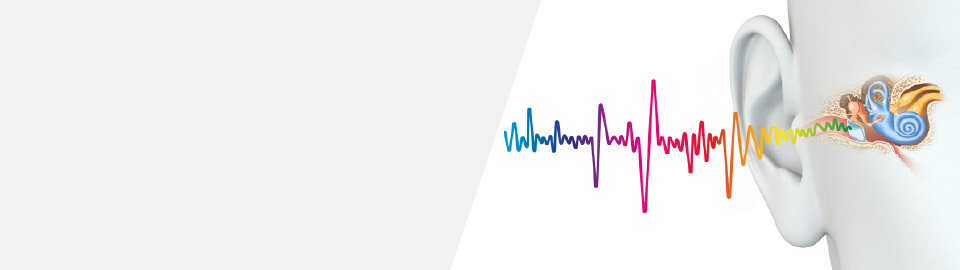
Sitting in a noisy restaurant, talking to a friend, or listening to your favourite radio station, your brain is working hard to filter out the unnecessary noise and help you concentrate on the sounds you want to hear.
Healthy hearing means that you can hear low frequencies like a bass drum, and high frequencies like a shrill whistle. Your brain can process very quiet sounds like a whisper and really loud sounds like a roaring motorcycle engine. It can also help you determine which direction a sound is coming from and help you determine how big a room is.
The earlier you take a hearing test, the earlier you will stop the negative effects of hearing loss – and the earlier you will start socializing and communicating again!
Research has continuously proven the effects that hearing loss has on social and psychological performance. Reduced aural stimulation can impair the brain’s ability to process sound and speech over time. When you can’t hear, your mental ability suffers. Treating your hearing loss at an early stage is important.


In some cases, hearing loss can be reversed. Hearing loss caused by otitis can reverse once you treat the inflammation in your ear.
Hearing loss due to inner ear damage or deterioration cannot be reversed. But you can still treat many cases and maintain your quality of life.
Only a licensed hearing professional can provide a hearing loss diagnosis. But here’s how to know when it’s time to seek help:
Our online hearing test can also help you decide if it is time to visit a hearing care professional. No email is required to view your results and the test will take about five minutes.
If your results suggest you may have a hearing loss, you can book a free hearing test.
“Hard of hearing” means you still have some hearing ability. It covers a range of hearing abilities but does not include the deaf community.
Those who are deaf have little to no hearing ability. They may rely on sign language or other forms of communication. The hard of hearing may use spoken language with the help of hearing aids or assistive devices.
Hearing loss is measured in decibels (dB), referring to how loud sounds need to be for you to hear them.
If you can hear sounds at 25 dB or lower, you likely have “normal hearing” and don’t need a hearing aid. People who can only hear sounds at 26 dB or higher may enjoy wearing hearing aids.
Hearing aids promote healthy hearing. Hearing well can keep you safe, maintain social connections and reduce mental strain.
“Hearing loss does not get the recognition it deserves. It is one of the five senses. You can watch a TV program on mute and you won’t get the context. But you can listen to a program and not watch it and your senses will follow along. That is the difference hearing makes.”
Jillian Price, M.Sc., Reg. CASLPO, Audiologist
While there is no cure for loss of hearing, there are steps you can take to reduce your risk. Learn more about healthy hearing practices and protection solutions you can start today.

Katie graduated with a Bachelor of Health Sciences (Honours), with Distinction, from the University of Western Ontario in 2006, followed by a master’s degree in audiology from the same institution in 2008. She began her career providing hearing healthcare as an audiologist at the HearingLife Cambridge clinic. Here, she supported clients in achieving better hearing outcomes for over 13 years.
1. Kochkin, Sergei (2009) ”MarkeTrak VIII: 25-Year Trends in the Hearing Health Market” The Hearing Review, vol. 16, no. 11.
2. McCormack, A. & Fortnum, H. Why do people fitted with hearing aids not wear them? Int J Audiol. 2013 May; 52(5): 360–368.
3. Chisolm, T. H., Johnson, C. E., Danhauer, J. L., Portz, L. J. P., Abrams, H. B., Lesner, S., … Newman, C. W. (2007). A systematic review of health-related quality of life and hearing aids: Final report of the American Academy of Audiology Task Force on the Health-Related Quality of Life Benefits of Amplification in Adults. Journal of the American Academy of Audiology, 18(2), 151-183
4. Masterson EA, Bushnell PT, Themann CL, Morata TC. Hearing Impairment Among Noise-Exposed Workers — United States, 2003–2012. MMWR Morb Mortal Wkly Rep 2016;65:389–394. DOI: http://dx.doi.org/10.15585/mmwr.mm6515a2
5. Haile et al. Hearing loss prevalence and years lived with disability, 1990–2019: findings from the Global Burden of Disease Study 2019. The Lancet. 2021 March. https://doi.org/10.1016/S0140-6736(21)00516-X