







Our clients say 9.5/10
Based on 64,661+ reviews in Canada for 2026 
9.5/10
Based on 64,661+ reviews
Based on 64,661+ reviews

If you are experiencing difficulty hearing, it could be due to issues with your outer ear, such as a blockage in the ear canal or damage to the ear drum. At HearingLife, we offer a variety of hearing aids that can help improve sound amplification and clarity for those with outer ear problems where no medical treatment is possible.
Background noise can be a major challenge for people with hearing loss. That's why our hearing aids are equipped with advanced noise reduction features that can help filter out unwanted background noise and improve speech recognition. Whether you're in a busy restaurant, on a crowded street, or at a lively event, our hearing aids can help you hear more clearly in challenging environments.
With our 90-day, risk-free trial period, you can experience life with them at home before you commit!
Everyone’s needs are different, and our hearing care professionals are here to help you choose the best fit for you ensuring that your hearing aid is not only equipped with the latest new advances in hearing aids. They'll even adjust it specifically to suit your lifestyle.
They are small, high-tech devices that help you hear if you suffer from hearing loss. They intelligently amplify your surrounding sounds (such as conversations, TV shows, or the radio) to help you communicate and participate in everyday situations.
“When paired with comprehensive hearing care, today’s advanced hearing aids are typically small and discreet, while being able to improve auditory experiences and restore meaningful connections,”
Katie Koebel - Audiologist and Senior Manager, Audiology
How does a hearing aid work?
Sound is carried across three different parts:
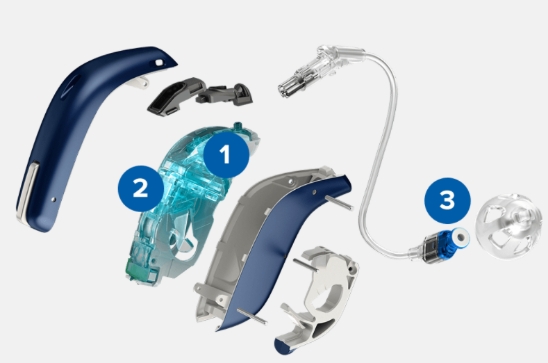


Hearing loss can feel isolating, muffling the conversations, music, and laughter that enrich our lives. But what if a tiny piece of technology could not only restore sound, but tailored to blend smoothly into your lifestyle and unique needs? That's the reality of new hearing aids, and they're revolutionizing the way we approach hearing health. One of the most recent being Oticon Intent - the world’s first hearing aid with user intent technology.
These new hearing aids may be small, but their impact is huge! Contrary to the myth that hearing aids are bulky, today's models are discreet yet life-changing, offering personalized solutions that perfectly align with your unique hearing care needs, lifestyle, and budget. Here are a few of the many ways these new hearing aids can improve your lifestyle with the technological advancements that come with them:
Why settle for muffled phone calls or frustrating Bluetooth connections? New hearing aids seamlessly connect with your smartphone or other devices, allowing you to stream music, calls, and audio directly to your ears.
Many new hearing aids connect with user-friendly smartphone apps. This puts the power of customization at your fingertips, allowing you to discreetly adjust settings and personalize your hearing experience in real-time.
No more scrambling for batteries! Many new hearing aids come with built-in rechargeable batteries, offering long-lasting power and eliminating the need for constant replacements.
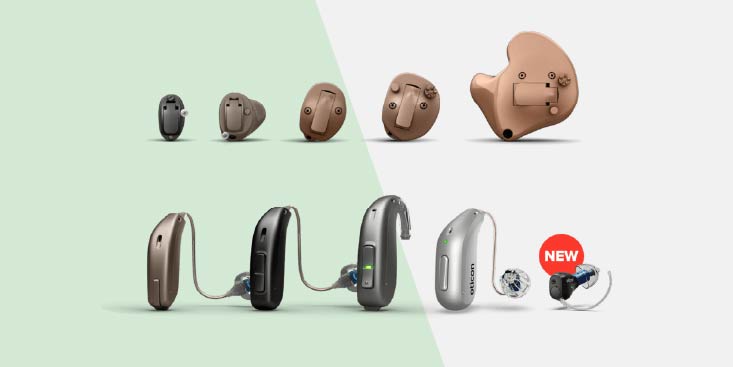
There’s more than one factor to consider when choosing a hearing device. To make sure you get the one that’s right for you, you’ll need to consider a few things, such as the severity of your hearing loss, ear canal shape, dexterity, lifestyle, your budget and other personal preferences. The guide below will help you get to grips with the differences between the main types of hearing aids.
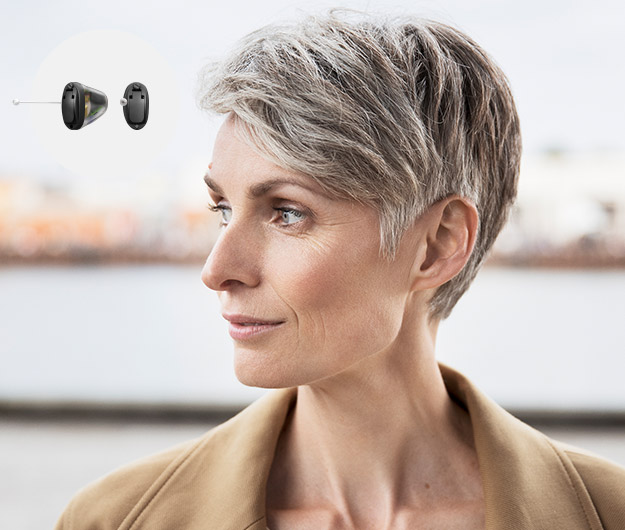
 Invisible-in-the-canal Invisible-in-the-canal |
 Completely-in-the-canal Completely-in-the-canal |
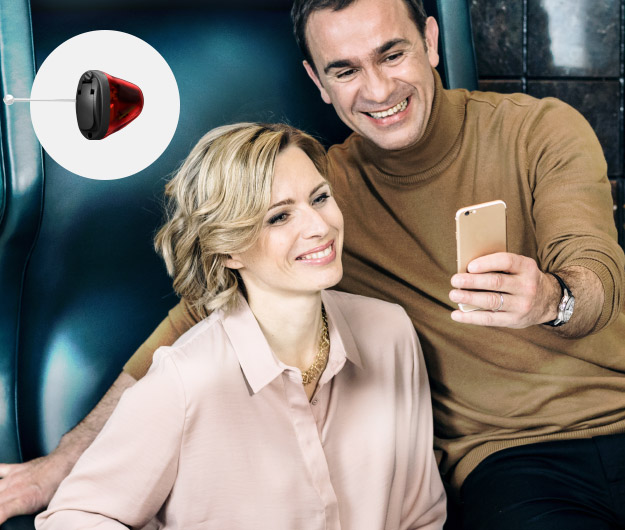
 In-the-canal |
 Half/Full shell in-the-ear Half/Full shell in-the-ear |
 miniRITE (Receiver-in-the-ear) |
miniRITE R (Receiver-in-the-ear) |
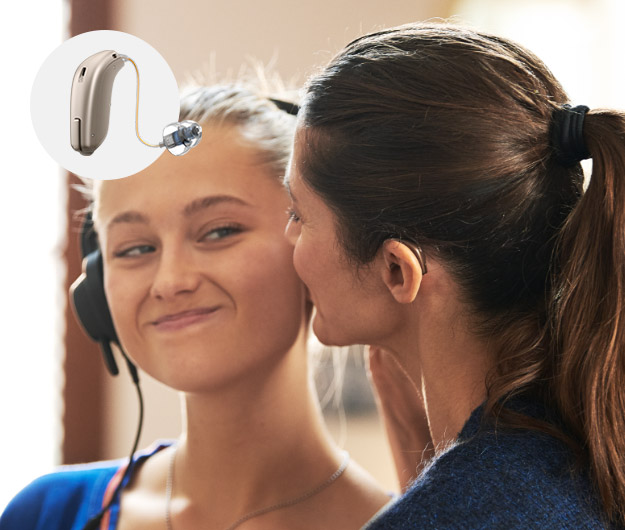
 Behind-the-ear Plus/Ultra Power |
|
| Most discreet | ✔ | ✔ | - | - | ✔ | ✔ | - |
| Bluetooth connectivity | - | - | ✔ | ✔ | ✔ | ✔ | ✔ |
| Long battery life | - | - | - | ✔ | ✔ | ✔ | ✔ |
| Easy to adjust volume and programs | - | - | - | ✔ | ✔ | ✔ | ✔ |
| Exchangeable battery | ✔ | ✔ | ✔ | ✔ | ✔ | - | ✔ |
| Rechargeable battery | - | - | - | - | - | ✔ | - |
| Mild to moderate hearing loss | ✔ | ✔ | ✔ | ✔ | ✔ | ✔ | - |
| Severe hearing loss | - | - | - | ✔ | ✔ | ✔ | ✔ |
| Profound hearing loss | - | - | - | - | - | - | ✔ |
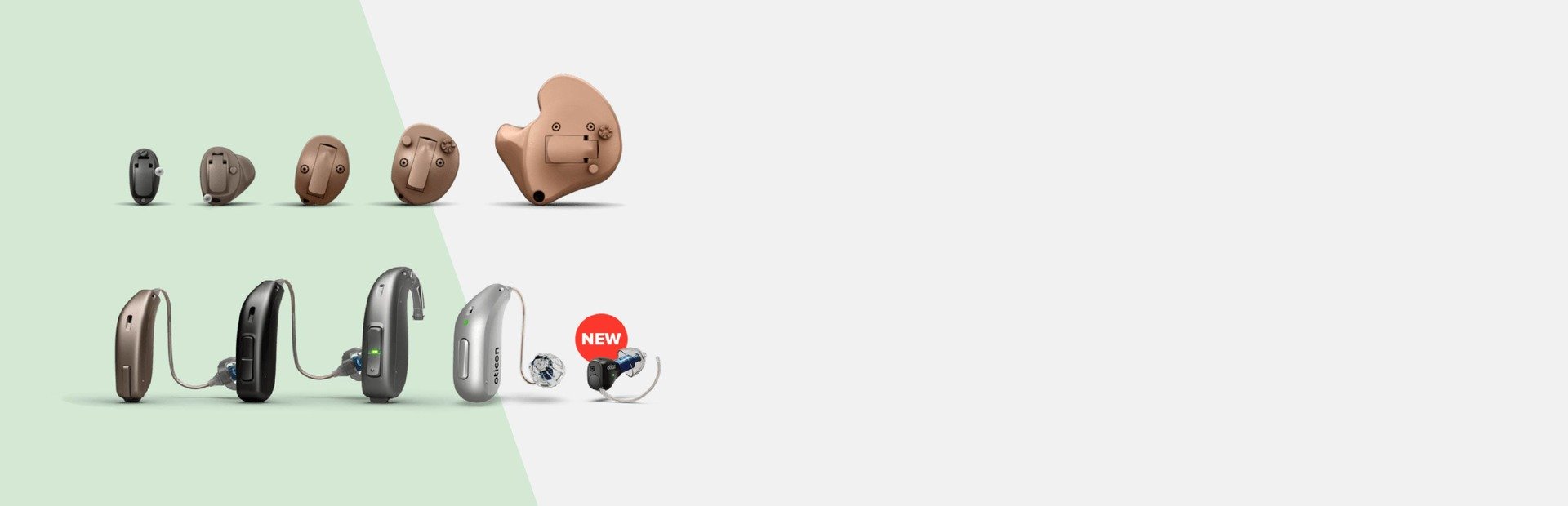
We have a wide range of models available with cutting-edge technology.






"When I play softball, it's not only about winning, it's also about communicating with my teammates. The social aspects. And not missing out on anything in my life"
|
Audio |
Visual |
|
Music I would say the most important thing in life is the freedom to be yourself.
|
Bob is smiling while getting ready to play softball |
|
Music
I have an ambitious mindset. I want to perform when it comes to sports. I want to perform when it comes to work.
And actually, I want to live my life to the fullest.
|
Bob holds a softball bat and warms up.
Bob walks towards his teammate and gives him a fist bump |
|
Music
Imagine that ability being taken away from you.
|
Bob sits on the spectator row and watches the others play while talking with his teammate |
|
Music
I am taking the responsibility to be free. Free to achieve things in life with no compromise.
|
Zoom in on Bobs face. Zoom out on Bob throwing the ball.
Bob talks with an audiologist in a clinic |
|
Music
When I play softball, it is not only about winning. It is also about communicating with my teammates. The social aspect and not missing out on anything in my life.
|
Bob inserts his hearing aids and interacts with his teammates |
|
Music |
White screen: Audika Logo |
There are many high-quality, reliable hearing devices on the market. Each brand or model is unique in its own way, and it can be difficult knowing where to start. We’ve brought together the most important information about the brands and models we offer at HearingLife. This way, you can get a quick overview of all your different available options.




Hearing aids have gone through major technological innovations during the past decade marked by new advances in hearing aids. Today's digital hearing devices deliver better sound quality and can make your life easier through intelligent, high-tech features.
Getting used to your hearing aids is a unique and personal experience that requires patience and a positive mindset. Here are some friendly tips to guide you through this exciting journey:



Hearing aids are not one-size-fits-all solutions and online reviews can be subjective. We want to help you find the best hearing aid, one that’s tailored to you including considerations for new advances in hearing aids. To do this, we’ll help you carefully consider the following:
By carefully considering these factors and staying informed about new advances in hearing aids, you can confidently choose the perfect hearing aid that suits you best.
Hearing aid prices in Canada vary depending on the level of technology, features, and your unique hearing needs. From standard models to advanced options, there’s a range of solutions to match different lifestyles and budgets. To explore what’s available and what to expect, learn more about hearing aid prices in Canada.
A pair of hearing aids can vary, ranging from $5 to over $20 per day over 2 - 3 years.
Insurance plans and medical coverage can also have an effect on the final price of the hearing aids. The more advanced technology and features a hearing aid offers, the higher the price. Finding the right price point for you is a matter of weighing the costs and advantages of hearing aid features and technologies and then matching these with your needs and budget.
You don’t need a referral from a doctor to receive a free consultation or to purchase a hearing device at one of our clinics.
We are happy to help you understand the different payment plans and funding options that are available to you.

Bobae Veronica Kim is an accredited clinical audiologist and international trainer. She holds a researcher position at the medical school of University of Melbourne and an honorary researcher position at the University of Adelaide.
Bobae has a BSc Economics from University of Sheffield, UK. She also has BSc Health Sciences in Pharmacology from University of Adelaide and a MSc in Clinical Audiology from Flinders University.