








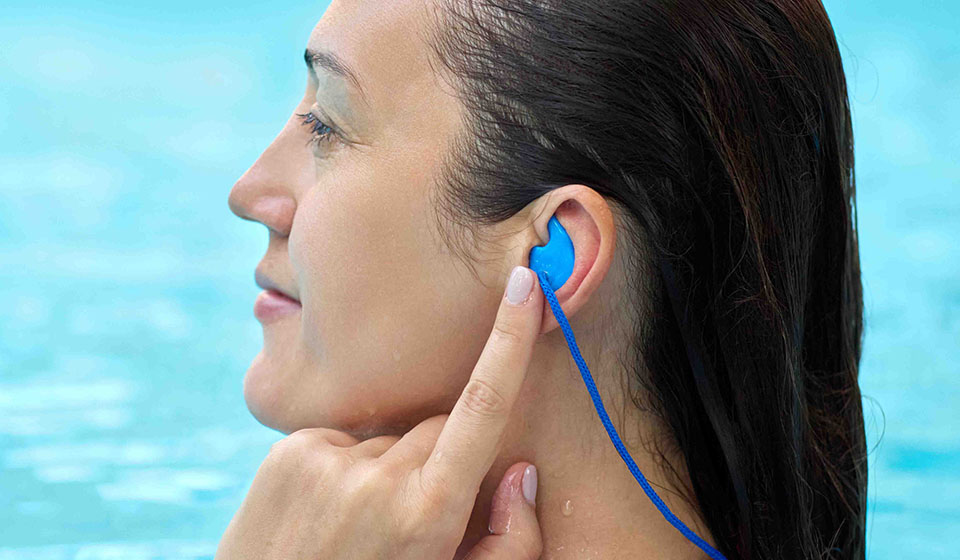
Key points
- The best earplugs for swimming are flexible and create a watertight seal.
- Avoid using foam earplugs for swimming; they absorb water and don’t provide a reliable seal.
- Visit a hearing clinic near you for custom earplugs for swimming.
You may be wondering, is it safe to wear earplugs while swimming? In most cases, yes—especially when using properly fitted, waterproof earplugs.
Whether you’re in a pool, lake, or ocean, earplugs can help reduce the risk of swimmer’s ear and discomfort—especially if you have sensitive ears or a history of ear issues.
Swimming earplugs can also help protect your ear canal from
- water exposure,
- irritation,
- and infection.
Earplugs are particularly beneficial for swimmers with recurring ear infections.
Choosing the best earplugs for swimming supports better ear health—allowing you to swim safely and comfortably.
Choosing the best earplugs for swimming
When selecting earplugs for swimming, fit and material are key. Look for earplugs that are:
- Waterproof
- Comfortable to wear
- Easy to clean
Hearing care professionals do not recommend foam earplugs for swimming. These earplugs absorb water and don’t provide a reliable seal.
Here are some options to consider instead.
Wax earplugs
Wax earplugs are typically made from a soft, moldable blend of natural wax (like beeswax or paraffin) often mixed with cotton fibers or wool.
Wax earplugs soften with body heat, becoming pliable and conforming snugly to the ear’s shape.
In water, wax plugs can soften further in warmer temperatures (e.g. heated pools), which may slightly reduce their firmness and compromise their seal over time.
Wax plugs can also become slippery when wet, potentially making mid-swim adjustments or reinsertion tricky.
Many standard wax plugs do not float (especially if the wax is dense or absorbs water), so a dislodged wax plug may sink and be lost.
Wax earplugs are best reserved for occasional swimmers or those with sensitive ears who prioritize comfort over longevity. Wax earplugs will need to be replaced more often.
Silicone earplugs
Silicone earplugs are a popular choice for swimmers because they create a flexible, watertight seal.
They are made from medical-grade silicone rubber. This rubber is durable, non-toxic and non-porous. It is also usually latex-free and hypoallergenic.
Silicone swim plugs come either as moldable putty or pre-formed shapes.
In water, silicone remains structurally stable; it doesn’t dissolve or significantly soften in heat.
Many silicone swim plugs are designed to be buoyant (by incorporating tiny air pockets or foam in custom plugs) so they tend to float if they fall out.
Overall, silicone plugs maintain their shape and integrity in water better than wax, contributing to a consistent fit even during vigorous swimming.
Custom-molded swim earplugs
For long-term comfort, many adults prefer custom molded silicone earplugs for swimming, which are designed to match the exact shape of the ear.
Custom earplugs are often the best swimming earplugs, particularly for
- Frequent swimmers
- Those with ear tubes or
- Those with a perforated eardrum.
Learn more about custom earplugs.
How to put earplugs in for swimming
To insert swim earplugs:
- Role the earplugs into a ball. This will warm them up and shape them to fit in your ear.
- Gently press or mold them into the ear opening to create a secure fit.
- Gently pull the top of your ear up while keeping the earplug in place with your thumb. This will help to release any trapped air.
Note: Unlike foam earplugs, silicone earplugs seal the entrance to your ear. You should not insert them deep into your ear canal.
Ultimately, the best earplug is one that fits you well and keeps your ears dry and healthy swim after swim.
For custom swimming earplugs near you, contact your local hearing clinic.